



































Address verification software
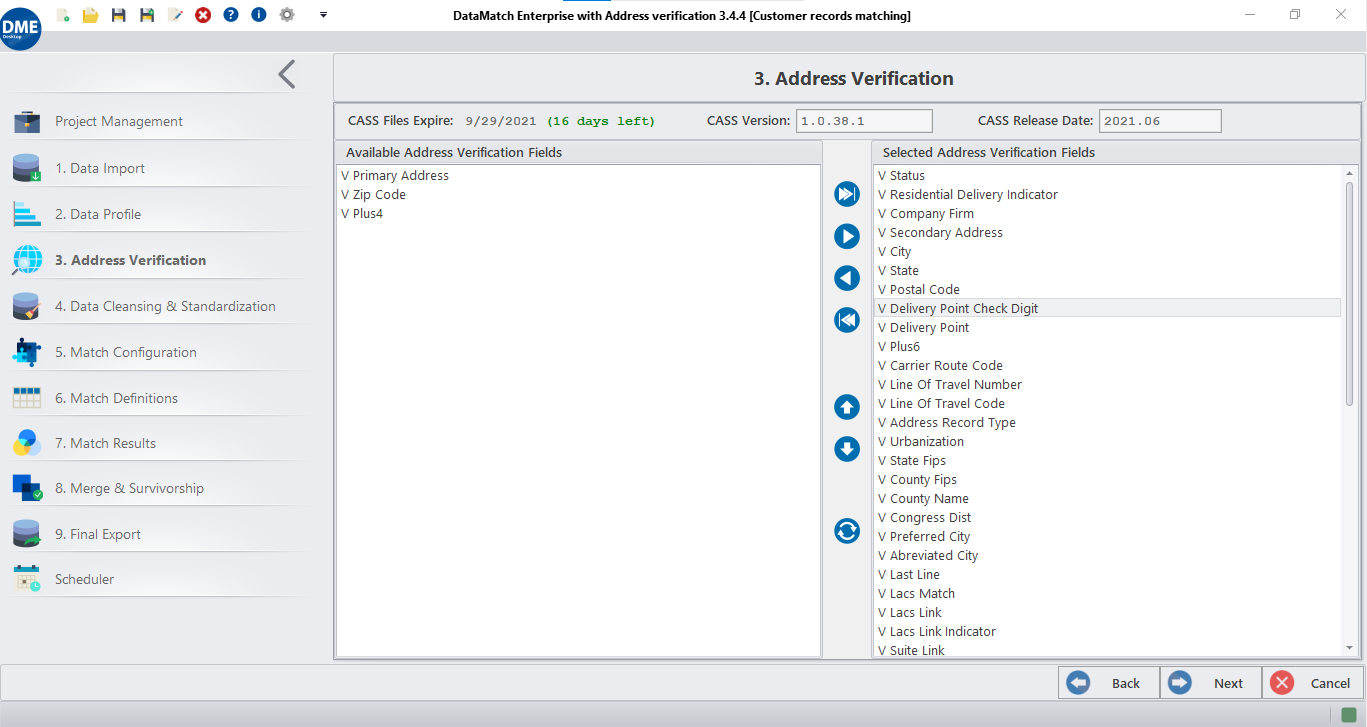
Verify and validate your addresses by running them against an official, authoritative database, like the USPS in the US, and update them to comply with the standardized USPS® format that highlights the ZIP+4 value along with the geocoded location.
Trusted By
Trusted By
DEFINiTION
What is address verification?
Address verification is the process of running addresses against an authoritative database – such as USPS in the US – and validating the realness of the information. This process verifies that the address is a mailable, accurate, and valid location within the country for delivering mail.
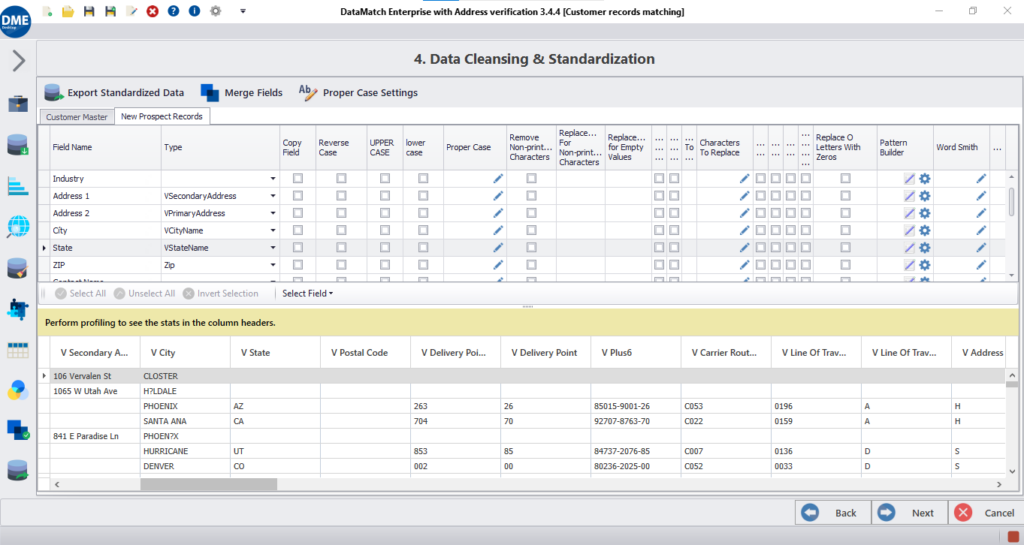
The process usually starts with address standardization, then goes on to parsing, geocoding, and formatting, etc.
Benefits
Why do you need an address verification tool?
Reduce mailing costs
Eliminate the cost and effort of mailing promotional materials to wrong or non-existent addresses.
Improve customer service
Higher mailing accuracy can lead to quicker deliveries which can improve brand perception and customer loyalty.
Identify households
Understand your customer-base in terms of households and run targeted campaigns to pitch relatable service offerings.
Understand customer behavior
Get accurate picture of your customer demographics with high quality, precise, and consistent address information.
Increase operational efficiency
Reduce manual labor, level up data quality, and optimize business processes with automatic address verification technology.
Ensure address standardization
Ensure that the addresses across all databases follow standardized format, such as the USPS address format.
Features
What DME’s address verification can do for you?
There’s more
What else do you get out of the box?
- CASS-Certifiedâ„¢
- Residential Indicator (RDIâ„¢)
- Geocoding
- ZIP+4â„¢
- Delivery Point Validation (DPV®)
- Enhanced Line of Travel (eLOT®)
- Locatable Address Conversion System (LACSLink®)
- SuiteLINK®
User roles
A tool made for everyone

Data analysts

Business users

IT Professionals

Novice users

Features
We take care of your complete DQM lifecycle
Import
Connect and integrate data from multiple disparate sources
Profiling
Automate data quality checks and get instant data profile reports
Cleansing
Standardize & transform datasets through various operations
Matching
Execute industry-grade data match algorithms on datasets
Deduplication
Eliminate duplicate values and records to preserve uniqueness
Merge & purge
Configure merge and survivorship rules to get the most out of data
Want to know more?
Check out DME resources

Merging Data from Multiple Sources – Challenges and Solutions

Oops! We could not locate your form.

Linking Similar Records with Incomplete Data: Proven Approaches for High-Accuracy Entity Matching
Last Updated on December 29, 2025 If record linkage were as simple as matching names and emails, organizations wouldn’t be sitting on mountains of unleveraged

How Inaccurate Data Impacts Your Bottom Line
Last Updated on December 29, 2025 Most data problems don’t show up as dramatic failures. They appear as small problems or hide in plain sight.

Linking Similar Records with Incomplete Data: Proven Approaches for High-Accuracy Entity Matching
Last Updated on December 29, 2025 If record linkage were as simple as matching names and emails, organizations wouldn’t be sitting on mountains of unleveraged

How Inaccurate Data Impacts Your Bottom Line
Last Updated on December 29, 2025 Most data problems don’t show up as dramatic failures. They appear as small problems or hide in plain sight.

Unifying Data Across Silos: Build a Single Source of TruthÂ
Last Updated on December 24, 2025 Most companies don’t realize how much time they lose chasing basic facts. But research shows that decision-makers spend nearly 30% of their week (2.4 hours a day) searching